

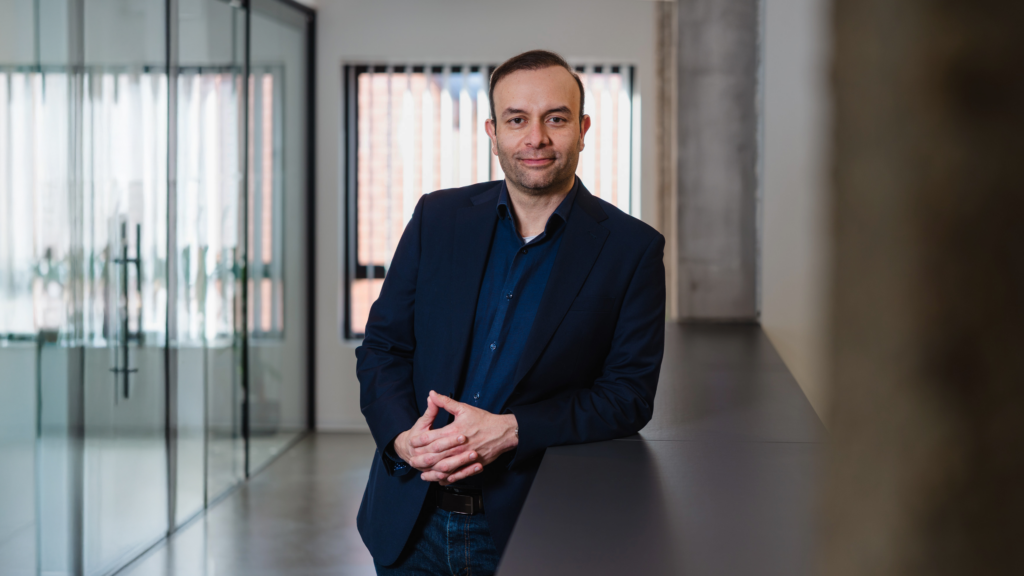
Madrid-based startup Fracttal, which provides AI-powered software through which asset-sensitive companies can manage, monitor and predict maintenance needs, announced today it has raised $35 million USD in a growth funding round led by U.S. private equity firm Riverwood Capital.
The round included participation from all existing investors, including Spanish Seaya Ventures, which seeks to accelerate the growth of European
and Latin American tech companies by leveraging the founders’ strategic vision.
Pedro Pedrejón, partner at Seaya Ventures and an early investor in Fracttal, noted that execution has been key for the company’s trajectory:
“We invested in Fracttal early because the team combined deep domain knowledge with the ability to execute over the long term. Since then, they’ve consistently delivered on their roadmap, expanded internationally, and built a platform that solves real, operationally critical problems. This next phase is about scaling that impact globally.”
Meanwhile, Riverwood Capital executive director Federico Storani will be joining Fracttal’s board, and said:
“Fracttal is uniquely positioned for continued expansion, with strong momentum in Latin America and a rapidly growing footprint in Europe. We are excited to work with Christian and the Fracttal team as they scale internationally and continue advancing the future of predictive, intelligent maintenance.”
The startup currently manages over 20 million registered assets, and is active in more than 60 countries. Its customers operate in the manufacturing and facilities maintenance industries, and include giants from Iberostar and Acciona, to Coca Cola and FedEx.
With the new funds, the Fracttal team will accelerate its growth in Europe and Latin America, including key markets like Mexico, Brazil, Spain and France – where Fracttal has strong product-market fit, marquee customers, and growing demand from mid-market and enterprise clients seeking predictive maintenance.
Christian Struve, CEO and co-founder of Fracttal, explained that the startup was born from the conviction that maintenance must transition from reactivity to proactivity, as well as be a driver of significant operational efficiency gains.
“Long before launching Fracttal, we saw thousands of companies struggling with manual processes and outdated spreadsheets, and we knew there was a better way. Today, AI is accelerating this shift, and Fracttal is at the forefront with a platform built on predictive and agentic capabilities that transform maintenance into a competitive advantage.”
Oxford Management Centre, for one, has found that AI is revolutionizing both asset reliability and operational efficiency in modern facilities. While predictive maintenance once relied on fixed schedules, manual inspections, reactive repairs, and outdated spreadsheets, it has not entered a new data-driven intelligence and advanced analytics era.
“AI changes the equation entirely. By analysing real-time data from sensors, IoT devices, and historical maintenance logs, AI algorithms can predict exactly when an asset is likely to fail. This enables targeted interventions, reducing waste and extending the lifespan of equipment,” the Centre said.
It is a historic transformation, Struve said. “Today, artificial intelligence and the proliferation of industrial sensors are opening possibilities that were unthinkable just a decade ago. We can now understand the condition of an asset before it fails, learn from every operation and empower maintenance teams to make faster, better decisions. That is the future we build every day at Fracttal thanks to our platform and our commitment to true Maintenance Intelligence.”
A significant portion of the investment will be destined to product development, especially enhanced AI and agentic capabilities, IoT sensor technologies, and advanced vertical data functionalities.
Fracttal will also invest in scaling its teams across engineering, data science, product, sales, marketing and customer success, while strengthening the internal structure needed to scale sustainably across targeted markers.
“It means a lot to us that all of our current investors, especially Seaya Ventures alongside Kayyak, GoHub, and Amador, are doubling down. It’s a strong signal. They’ve seen the product mature, the technology scale, and the impact we’re having with customers, and they’re choosing to continue backing us in this next phase,” Struve concluded.
Featured image: Christian Struve via Fracttal

Disclosure: This article mentions clients of an Espacio portfolio company.