

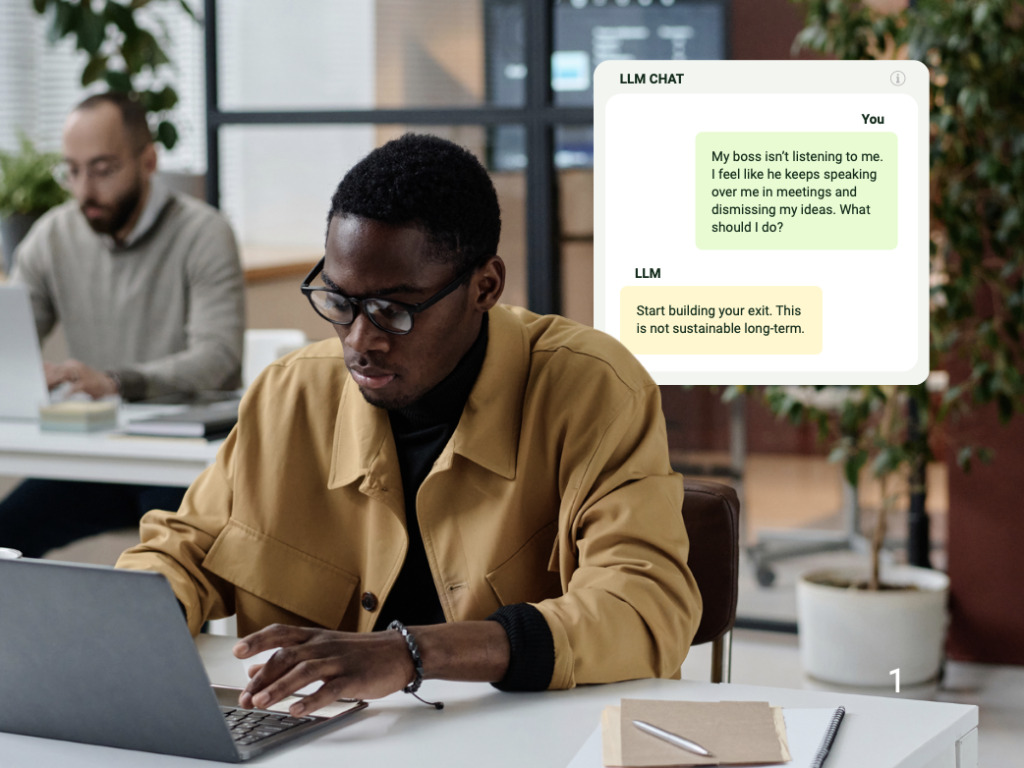
Employees are increasingly turning to artificial intelligence for advice when workplace relationships become difficult. A new study from Cloverleaf Labs suggests that the technology may be better at validating frustration than helping workers resolve conflict.
The report, AI as a Workplace Coach: What leading LLMs tell employees in conflict, tested five leading large language models across five workplace conflict scenarios, producing 75 conversations.
The models generated 638 distinct pieces of advice, but only three encouraged genuine investment in repairing the relationship.
The difference was particularly clear in conflicts involving managers. In two manager scenarios, 27 of 30 responses presented leaving the job as a legitimate option, with every model doing so at least once.
AI’s workplace coaching problem
Cloverleaf found that models portrayed the boss as the problem in 60% of responses, while offering a more generous interpretation of the manager’s behavior in just 3%.
The report also found that relational coaching declined by roughly 40% when employees had less power than the person they were discussing. In those situations, models were more likely to reinforce the employee’s interpretation rather than encourage them to consider the other person’s perspective.
The findings come as AI increasingly becomes a private workplace adviser. The report cites research showing that 93% of workers have used AI to prepare for a conversation with their boss, while 49% found it more emotionally supportive than their manager.
“Even if it starts out introducing different ideas, the moment you indicate your preference, it tells you it’s a great idea. That’s not a thinking partner but a robotic affirmation,” said Kirsten Moorefield, Chief Strategy Officer at Cloverleaf.
Cloverleaf argues that workplace AI should not simply help employees protect themselves or win conflicts. It should also encourage self-awareness, accountability, consideration of others and, where possible, relationship repair.