

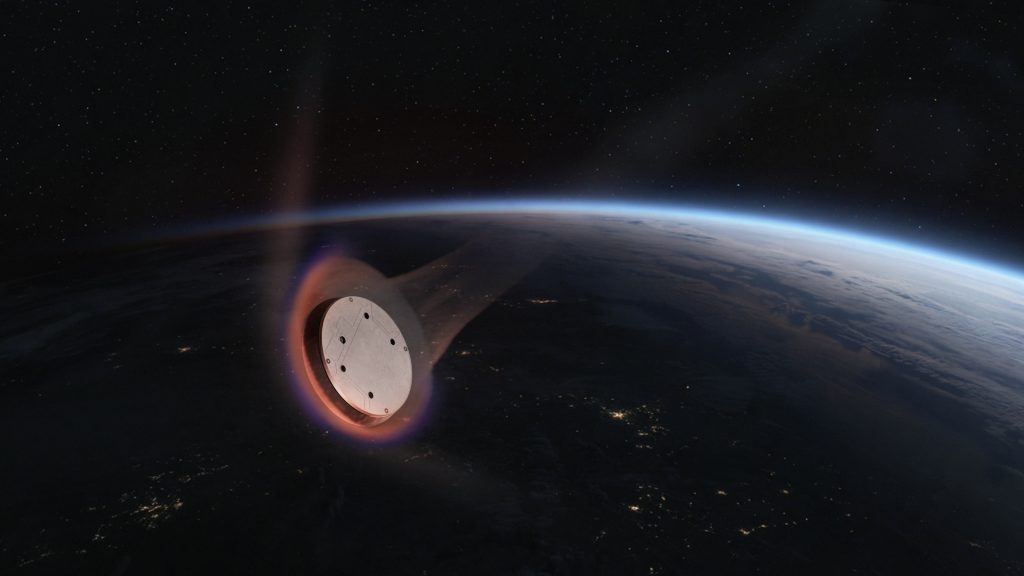
In-space manufacturing is set to take a major step towards industrial scale up as Space Cargo Unlimited (Space Cargo) today announced plans to launch a one tonne space factory providing microgravity services aboard SpaceX’s Starfall spacecraft that will launch aboard a SpaceX Starship rocket in 2028.
By flying aboard Starfall, Space Cargo will see an order of magnitude increase in their capacity for in-space manufacturing, the largest in the sector. This builds on existing 100kg missions, marking the largest leap to tonne-scale space production, delivering high-volume, high-power space factories built for true commercial applications.
The landmark announcement positions Space Cargo as an integration layer between the next wave of launch and re-entry vehicles as well as the customers who want to use space as a factory floor for orbital manufacturing. Rather than requiring customers to develop specialist spaceflight hardware, Space Cargo absorbs that complexity, providing an end-to-end service for customers, spanning integration and pre-launch access, launch, in-orbit operations for manufacturing processes, and return to Earth capabilities.
This launch will support making manufacturing in microgravity more accessible to a broader range of industries, opening new high-growth markets and enabling the development of next-generation pharmaceuticals, biotechnology, and advanced materials that can only be produced in space.
This mission represents a generational leap in scale, on what is already the highest capacity for microgravity access on the market, opening the door to more frequent, higher-capacity in-space manufacturing missions in low Earth orbit. It also serves as a step in Space Cargo’s broader fleet strategy, scaling from their 100 Kg-factory to one tonne, and expanding further still with REV1, a larger autonomous orbital factory and re-entry vehicle based on ESA’s Space Rider, in development with Thales Alenia Space, reinforcing the scalable commercial mission approach.
Nicolas Gaume, Co-founder and CEO of Space Cargo Unlimited, said:
“For more than thirty years, we’ve known that manufacturing in microgravity can create materials and products that simply cannot be produced on Earth. The challenge has never been the science. The challenge has been making access commercially practical, repeatable and scalable.”
“We believe space is reaching that moment. By leveraging SpaceX’s world-leading launch capabilities for our next-generation one tonne capacity space factories, we’re building a true assembly line for microgravity, supporting our customers as the layer between launch providers and manufacturers who want to innovate as fast in orbit as they do on Earth.”
Ahead of the launch, Space Cargo is in active discussions with over one hundred customers and prospects, approximately 40% being in the life sciences and biotech sectors, reflecting early commercial demand for manufacturing capacity in orbit. This mission represents an important milestone in the transition from experimental missions to routine in-space industrial production.