

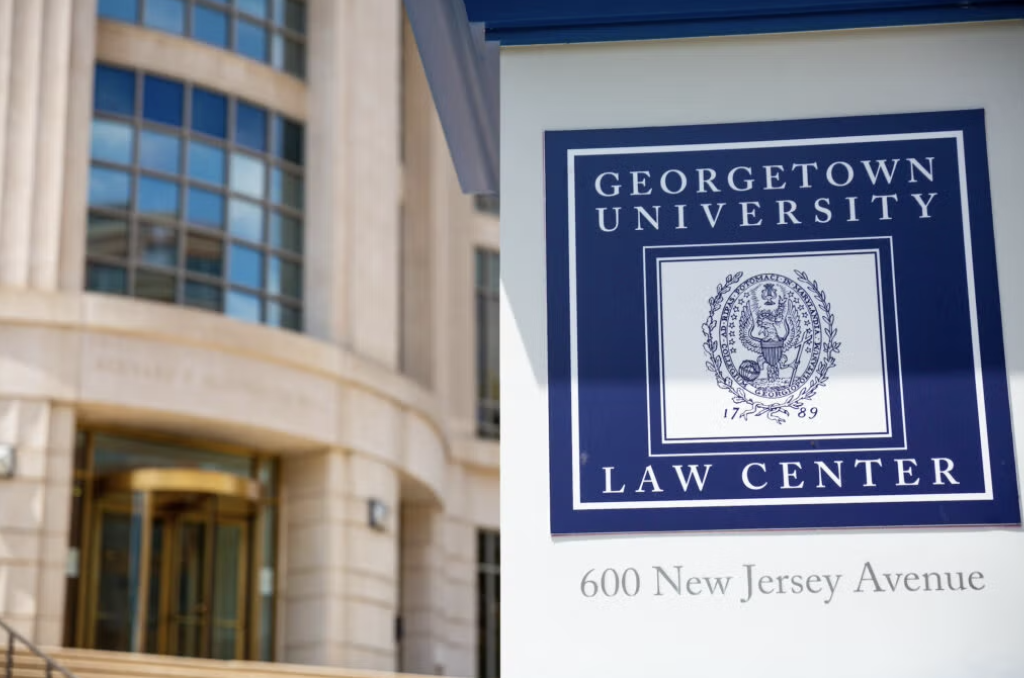
When Georgetown Law’s Advanced eDiscovery Institute opens at the Capital Hilton on November 19, the 450-plus judges, litigators, in-house counsel and technologists expected in Washington will arrive with a narrower question than the one that filled last year’s panels. Most of them have already put generative AI to work somewhere in discovery.
What they are still sorting out is how to show that the output holds up, whether the person asking is a client reading an invoice or a judge ruling on admissibility.
The adoption numbers have moved quickly. The Thomson Reuters Institute’s 2026 AI in Professional Services Report found that 40% now work at organizations using GenAI, up from 22% a year earlier. Measurement has lagged far behind.
Only 18% said their organizations track return on investment, and another 40% didn’t know whether anyone measured it at all. Clients add to the confusion: two-thirds of corporate respondents want their outside firms using AI, yet fewer than one in five actually require it.
The courts have been slower still, and deliberately so. Proposed Federal Rule of Evidence 707 would have held AI-generated evidence offered without an expert to the same reliability standard as expert testimony under Rule 702. It drew criticism from both sides of the bar during a comment period that closed in February.
On May 7, the Advisory Committee on Evidence Rules declined to advance it or any of three redrafts, and set aside the first part of its October 15 meeting in Boston for a symposium of technical experts and practitioners. By Redgrave LLP’s reading of the process, the earliest any AI evidence amendment could now be published for comment is August 2027.

One figure from that process explains the committee’s patience. When the Federal Judicial Center surveyed every federal trial judge about deepfakes, more than 930 responded. Fifteen said they had faced a challenge claiming evidence was AI-fabricated. Rulemakers are being asked to write for a problem most of the bench has yet to see, and until they do, practitioners are applying existing rules one matter at a time.
That gap, between how widely AI is being used and how little of it has been tested, is where a good share of the hallway conversation in Washington is likely to settle.
It is also familiar ground for Shimmy Messing, CEO of Altorney, who will be attending the Institute. Altorney, founded in 2021, runs a marketplace that matches law firms, ALSPs and corporate legal departments with document review attorneys, in addition to its MARC solution. That puts the company next to eDiscovery.
In practice, an AI-assisted review still ends with people confirming privilege calls and sampling results, and someone has to staff, supervise and document that work in a way that survives a meet-and-confer. Attendees working out how human review fits around the new tools, and what it should cost, will find Messing in the room.
The program itself leans toward testing over talking. AEDI’s AI Proving Grounds labs, hosted by Everlaw and Relativity, return this year and for the first time carry CLE credit. Attendees can run early case assessment, fact development, chronology building and deposition prep on the tools themselves, with each host offering a pre-conference lab on November 18. The labs are open only to in-person registrants.
The Institute has met for more than two decades, long enough to have watched technology-assisted review travel from a contested novelty to accepted practice. Generative AI is moving faster than TAR did, with far less case law behind it.
For the 60-plus speakers on this year’s program, the most useful contribution may be a working picture of what a defensible process looks like while the rules are still being written.