

As artificial intelligence becomes part of everyday workplace decisions, its influence is extending beyond productivity and automation. It is also beginning to shape how employees interpret conflicts, evaluate their managers, and decide whether their professional relationships are worth maintaining.
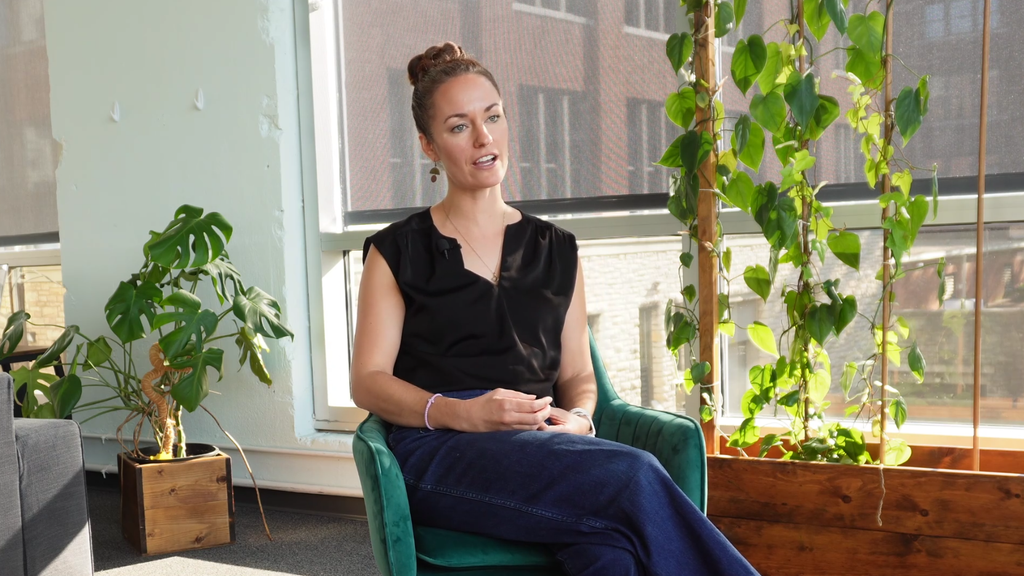
Kirsten Moorefield, co-founder of Cloverleaf Labs, believes this could create a less visible challenge for organizations: growing employee disengagement, distrust, and relational distance.
In a video discussing how large language models (LLMs) respond to workplace conflicts, Moorefield described being surprised by how consistently AI systems recommended that employees consider leaving their jobs rather than attempting to repair difficult professional relationships.
“I really couldn’t believe that every single LLM said you should build up your exit ramp, start thinking about quitting, find a new team,” she said.
Some responses reportedly included questions such as whether an employee had the right boss, whether the relationship was beyond repair, or whether it was time to pursue a different career path.
However, Moorefield does not believe the immediate consequence will be a mass resignation wave driven by AI advice.
“I don’t think that’s the accurate headline,” she explained.
The bigger concern: disengagement and workplace distrust
Moorefield referenced McKinsey research indicating that employees who are power users of AI are 10% more likely to leave their jobs within the next three to six months.
She argued that this relationship makes sense because employees with stronger AI capabilities may also have more marketable skills and opportunities elsewhere.
But she sees a different organizational risk emerging from the widespread adoption of AI: employees becoming less willing to experiment, collaborate, and adapt to new ways of working.
“I think actually, what you’re going to see is a continued drop in all the things that everyone says we need right now. Like, really leaning in and having agility and embracing new tools. You’re going to see an increase in disengagement and fear,” Moorefield said.
She also pointed to the challenge of managerial engagement, claiming that while one in three managers were engaged a few years ago, the figure has since deteriorated to four out of five being disengaged.
The concern is that employees may increasingly perceive new technologies as threats rather than opportunities.
“Am I training this tool to take my job?” is one of the questions Moorefield says employees are beginning to ask.
She also warned that AI-generated advice can reinforce suspicion toward colleagues, encouraging people to distance themselves from others instead of trying to understand different perspectives.
For organizations, this creates a difficult problem because disengagement and deteriorating workplace relationships are not always reflected in conventional performance indicators.
Moorefield described this dynamic as a “silent disease” growing inside organizations, one that can weaken collaboration without immediately producing measurable consequences.
At Cloverleaf Labs, Moorefield said the company’s research project was built around personality science to explore how AI could respond differently to workplace disagreements when given more information about the people involved.
She described an example involving a highly analytical manager who processes information externally and thinks out loud, working with an employee who is less detail-oriented and more focused on the future and the bigger picture.
When the employee complains about the manager, an AI system without sufficient context might interpret the behavior as evidence of a toxic relationship and recommend finding a workplace that offers greater appreciation.
However, when the system has relevant personality data, it can offer a different interpretation.
“If the AI has the right data, it responds in a way that actually builds your curiosity about the other person,” Moorefield explained.
Rather than automatically validating one person’s interpretation, the technology can help explain why the other individual behaves differently and suggest ways to approach the disagreement.
The distinction is important. Workplace coaching and human resources practices have traditionally emphasized understanding different perspectives, asking questions, and gathering context before making judgments about interpersonal conflicts.
Moorefield argues that AI should support those principles instead of reinforcing an employee’s initial frustration.
Only three out of 638 recommendations encouraged relational repair
One of the most striking findings Moorefield shared involved an analysis of 638 pieces of AI-generated advice.
The research team established a high threshold for what qualified as relational repair. A recommendation had to encourage someone to approach the other person with genuine curiosity, consider what they could change in their own behavior, communicate their needs, and remain open to receiving feedback.
Under those criteria, relational repair appeared only three times across the 638 recommendations.
“That only happened three times out of 638 pieces of advice,” she said.
Interestingly, those recommendations appeared when the person complaining about a workplace relationship was a manager discussing a direct report.
For Moorefield, this illustrates how easily AI can validate an individual’s perspective without encouraging the kind of mutual understanding needed to improve a professional relationship.
She believes better AI systems should help people move beyond simply surviving difficult workplace dynamics or managing them through political and relational distance.
Instead, they should equip employees and managers to understand one another, communicate their needs, acknowledge their own contributions to a conflict, and recognize that professional relationships can improve.
As companies introduce AI into more aspects of their operations, the challenge will not only be teaching employees how to use new tools. It will also involve preserving the trust and collaboration that allow teams to adapt together.
“AI needs to be informed with the right data,” Moorefield said.
Her broader argument is that technology should help people become more curious about one another, not give them additional reasons to disconnect.