

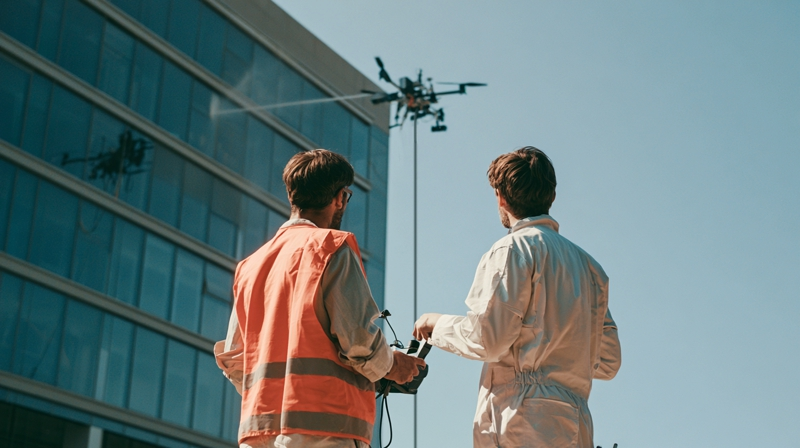
SkyPSI, a Dallas-Fort Worth-based technology company, has launched with a $5 million investment from founder and CEO Vic Pellicano, betting that robotics can create new opportunities for independent operators rather than simply replace blue-collar workers.
The company is building a business around commercial exterior cleaning drones, but its model goes beyond selling or leasing robotic equipment. SkyPSI provides independent operators with professional cleaning drones, training, certification and access to commercial contracts that the company has already secured.
The operator remains an independent business owner, while SkyPSI provides the infrastructure needed to get the business running.
“For working-class people the tradeoff was always the same: you traded your body for a paycheck,” Pellicano said. “Not anymore. The robot takes the risk. You take the contract. And this time your name is on the company.”
Commercial cleaning drones themselves are not new. SkyPSI’s proposition is to build the business infrastructure around them.
The company says its operators receive training and certification before being connected to commercial cleaning work. They operate their own businesses, including their own vehicles and crews, while the drone handles some of the most hazardous portions of exterior building maintenance.
That distinction is central to Pellicano’s thesis.
Rather than automating away an existing cleaning business, SkyPSI wants to lower the barriers to entering the industry by combining robotics with contracts, training and operational support.
The opportunity is significant. According to SkyPSI, the commercial cleaning market is projected to approach $860 billion by 2034, while robots currently account for roughly 1% of the industry.
The company also argues that drone-based cleaning could allow commercial properties to schedule exterior cleaning more frequently. Buildings that might previously have been cleaned once a year because traditional rope-based work was expensive and dangerous could potentially be serviced several times a year using drones operated from the ground.
Safety is another part of the company’s pitch. Falls remain a major occupational hazard in exterior building maintenance, particularly when workers are required to operate at significant heights. SkyPSI’s drones are designed to perform the cleaning work while an FAA-certified pilot operates the system from the ground.
For property owners, the company is positioning itself as an accountable service provider rather than simply a technology vendor. SkyPSI sells the commercial contracts, then brings independent operators into the jobs and provides the infrastructure needed to complete them.
That model is also intended to address one of the less visible challenges of robotics adoption: deployment.
Buying a robot does not automatically create a business. Operators still need training, certification, insurance, customers and operational support. SkyPSI is attempting to bundle those elements into a single platform.
Pellicano’s own background is part of the company’s rationale.
The son of a truck driver who grew up in a trailer park outside Chicago, Pellicano experienced homelessness before building his technology career. He founded Verenia, which was acquired by Oracle in 2022, and later founded AI drone company Avianna, which he sold in 2024.
Now he is putting $5 million of his own capital behind SkyPSI.
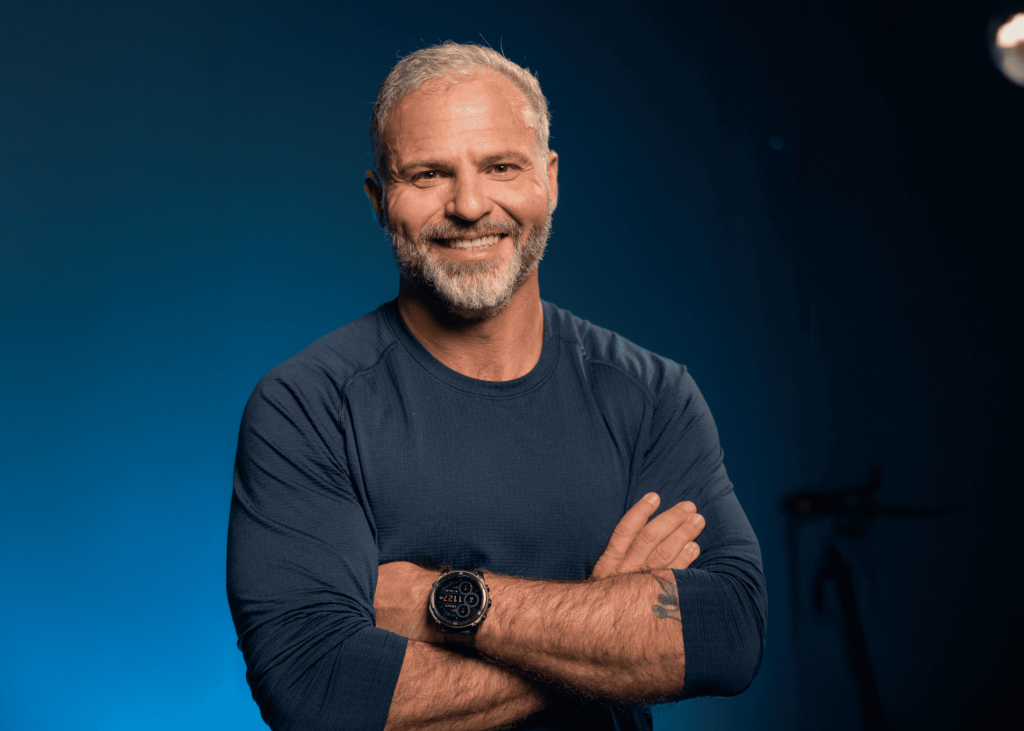
“Tech turned a homeless kid from a trailer park into a multimillionaire,” Pellicano said. “I’m putting $5 million of my own money into making sure working people get the same shot. Machines should take the strain. People should take the profit.”
SkyPSI is initially launching in Dallas-Fort Worth and plans to expand across the Texas Triangle before moving into other U.S. markets.
The company’s initial customer base includes commercial properties such as hotels, senior living communities, office buildings, multifamily and HOA communities, medical facilities, parking structures, and retail and mixed-use developments.
The broader bet is that robotics adoption does not necessarily have to mean fewer business owners.
For SkyPSI, the technology is the mechanism. The business opportunity is the product.